


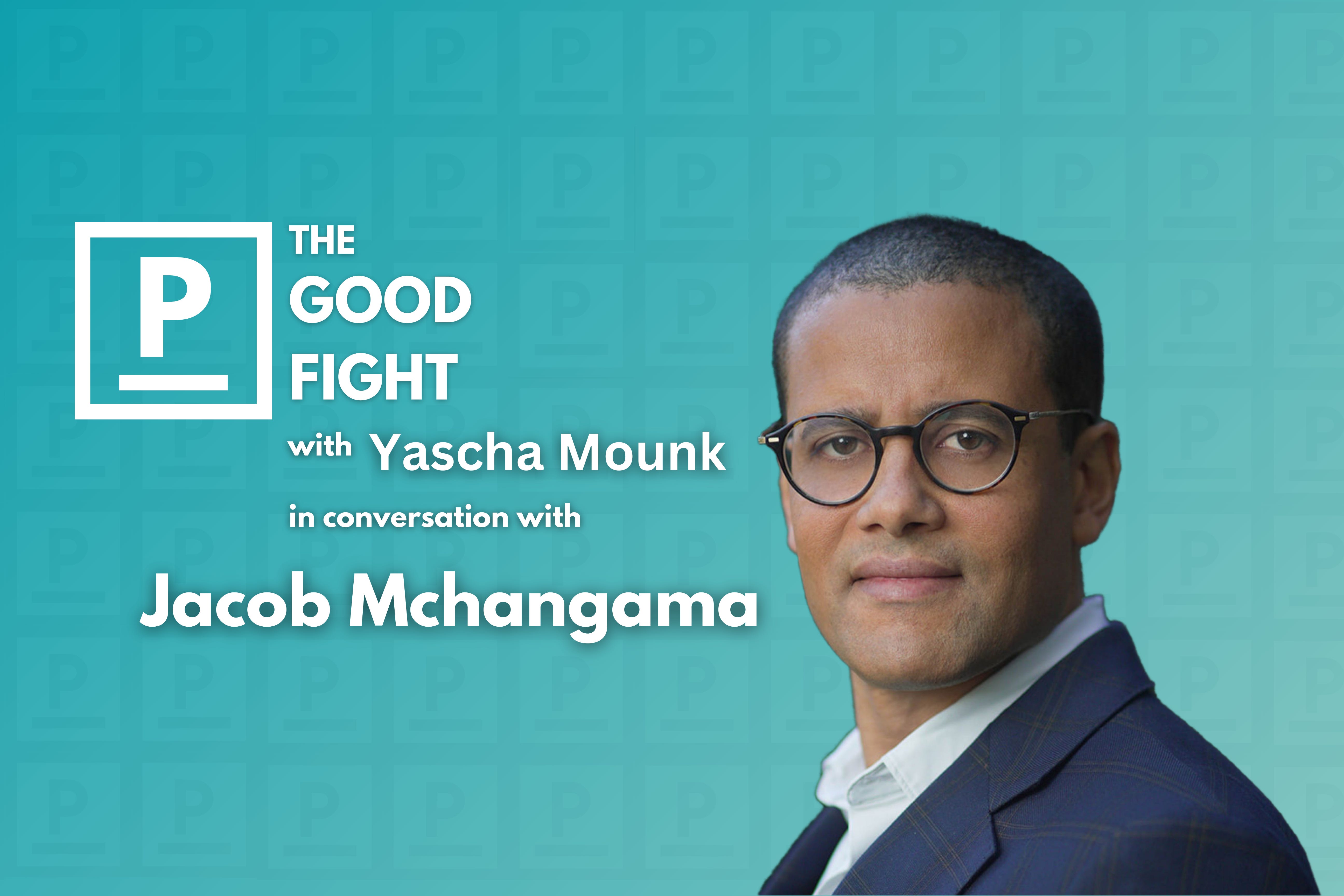
Jacob Mchangama is the Executive Director of The Future of Free Speech and a research professor at Vanderbilt University, as well as a Senior Fellow at The Foundation for Individual Rights and Expression. His latest book, with Jeff Kosseff, is The Future of Free Speech: Reversing the Global Decline of Democracy’s Most Essential Freedom.
In this week’s conversation, Yascha Mounk and Jacob Mchangama discuss why we’re experiencing a global free speech recession despite technological advances, how hate speech laws are being weaponized against their original intent, and whether democracies can resist the authoritarian playbook for controlling online discourse.
This transcript has been condensed and lightly edited for clarity.
Yascha Mounk: In one sense, we are in a golden age of free speech. The ability for people to make their voices heard is much greater than in the past. It is much easier for a lot of ordinary people to participate in the political discourse in a meaningful way. The access to information that we have as citizens is in many respects probably better than it ever was. In earlier periods, it would have been much harder to get specialized information about things, even to do things like read a court judgment that interests you.
All of that is now available at the click of a button. That is partially a result of social media, partially a result of Google, partially a result of artificial intelligence that can now go into a lot of very interesting research for you and distill a lot of the material that you’re trying to understand. If there’s a technical document that previously perhaps you weren’t expert enough to understand, you now have an assistant that can help you do that. So in many ways it seems like we are actually in quite a good time for free speech. Why do you argue that nevertheless we should think of this period as a “free speech recession?”
Jacob Mchangama: I think you’re absolutely right. The World Wide Web, social media, and now AI—in many ways, it is true that if you compare our ability to share and access information to that of Enlightenment heroes, or even after the immediate adoption of the First Amendment or the French Declaration on the Rights of Man that did away with entrenched censorship, we have a lot more options, at least in democracies around the world. If you’re in China, it’s probably a different story, even though you could have certain tools that help you.
I think the huge difference is that for a very long time, there was this sense in democracies that free speech was part of a winning formula that entrenched freedom and democracy—that so-called third wave of democratization that washed the shore in all parts of the world—and a sense that technology was extremely helpful with that. That calculus has changed dramatically, both in democracies and authoritarian states. Authoritarian states were at one point extremely concerned about the World Wide Web and its ability to circumvent official propaganda and censorship. You see that very clearly in the so-called “Document Number Nine,” which is an internal communiqué from the Chinese Communist Party circulated shortly after Xi Jinping comes into power, which talks about how there’s a need to really crack down on western concepts of constitutionalism, press freedom, and so on.
You also see it in 2012 in Russia, after Putin essentially fakes the presidential election and comes back into office. There’s a coordinated effort to say: we don’t want the kind of street protests that were coordinated on social media, on Facebook and V-Kontakte in Moscow. That really was a bad look for Putin when he was triumphantly coming back into the presidency. At that time, democracies were still looking back at the Arab Spring and saying the internet is mostly a good thing. Then you have Brexit, you have the 2016 election, and prior to that, terrorist content from ISIS spreading on social media—and then the mood sours. Suddenly free speech is being seen not as a competitive advantage for democracies against their authoritarian counterparts, but as a Trojan horse that allows the enemies of democracies, both from within and without, to chip away at the foundations of democracy.
There is then this attempt to say we need a new conception of free speech, one that is more militant, and where we need to reimpose some kind of top-down control of the public sphere, because with the internet, it’s basically the lunatics who are running the asylum in terms of the public sphere.
Mounk: That’s really interesting. I hadn’t quite thought about the relationship between these two things in as clear a way. There’s a period in which there’s naive enthusiasm about how the internet and social media are going to lead to an expansion of democracy around the world, and so that makes people a little bit naive—thinking that China is sure to liberalize and perhaps even become a democracy within our lifetimes.
That story turns out to be wrong, in part because dictators learn how to control the internet and how to control social media for their own purposes, and they’ve become very good at that. But you’re right that along with that, you’ve also had a real inversion in how a lot of reasonable, middle-of-the-road people think about free speech within democratic societies. At the period where people thought social media leads to Occupy Wall Street and the Green Revolution in Iran, they thought free speech is therefore a left-wing value. I remember even causes that always seemed to me to be somewhat minor from a free speech perspective—like net neutrality, defined as no internet service provider could possibly prioritize a video file over a text file, or the whole principle of the internet would be broken—being the cause célèbre of people like John Oliver on Last Week Tonight when that show started on HBO. It was a time in which the left was, at least in this respect, quite instinctively for internet freedom—perhaps not for free speech in every respect, but for internet freedom at least.
Now, after 2016 and Cambridge Analytica and the election of Donald Trump, as well as the erection of a great firewall in China and other things, there’s this feeling that domestically what social media brings you is Donald Trump, and internationally what it brings you is dictatorships being able to sow disinformation and so forth. Suddenly we’re in a world in which the “right-thinking people” on the left, but also a lot of the middle-of-the-road people in the center, are saying social media is what’s polarizing our societies, what’s destroying our societies, and we need all of these new regulations in order to deal with it.
It’s remarkable how quickly that paradigm shift happened. It now feels as though this is the world we’ve been in for a long time, but ten years ago the discussion was still quite different.
Mchangama: Absolutely. I would say it’s not even confined to the left. People who I admire a lot and respect, whose liberal democratic credentials are impeccable—like Anne Applebaum and Francis Fukuyama—have also, I think, changed their tone on this, certainly Applebaum has, in terms of wanting more stringent social media regulation. Jonathan Haidt is another one.
Another thing, of course, is that especially in the United States, culture war issues have infused this topic, which makes it very easy to pick positions depending on those fault lines. The free speech position, especially when it comes to online speech, gets equated with right-wing populism, for instance, or being in favor of disinformation, or not caring about the spread of hate speech and so on—which I think is pretty lazy argumentation.
We hope you’re enjoying the podcast! If you’re a paying subscriber, you can set up the premium feed on your favorite podcast app at writing.yaschamounk.com/listen. This will give you ad-free access to the full conversation, plus all full episodes and bonus episodes we have in the works! If you aren’t, you can set up the free, limited version of the feed—or, better still, support the podcast by becoming a subscriber today!
If you have any questions or issues setting up the full podcast feed on a third-party app, please email leonora.barclay@persuasion.community
On the other hand, I also think it is incumbent on free speech advocates—those who think it’s extremely important to hold on to a principled, robust conception of free speech in the online age—to acknowledge that free speech is not an unalloyed good. It comes with harms and costs. That’s not unique to the digital age. If you go back and look—and it would be an interesting experiment to look at the writings of the first 300 years of the printing press—how much of that would reflect values that we appreciate today? How much of it would be deeply hateful and full of misconceptions and lies and propaganda? Probably a lot.
Mounk: Let us get a little more concrete and understand what measures some of this background shift in the debate you’ve been talking about have actually led to. I’m less interested here in the straightforward dictatorships—we can get to those. Obviously, the ability of authoritarian governments around the world to very quickly censor what their citizens are posting, to have much greater insight into what’s going on on social media platforms at all times, to block content from outside the country that they find unfavorable, and even to shape—in the case of China—the development of chatbots by the leading AI labs within the country in such a way that they will be politically reliable: all of that has advanced very far, and it has narrowed the space for free speech, which was always very restricted, in an even more extreme way.
But what I’m interested in is the countries that are democracies, that claim to care for democratic values, that aren’t even captured by the most illiberal populists. I’m not talking here about Turkey, which has a horrible record on free speech, or Venezuela, which has a horrible record on free speech—but countries where over the last years we’ve seen the real introduction of rules, regulations, and sometimes criminal laws that make it much more dangerous to express your political opinion. I imagine that a bunch of European countries fall into that category. The United Kingdom, outside the EU but still within the geographic entity of Europe, falls within that realm, and countries like Brazil might be counted among those places as well. What are some of the concrete changes that have happened there in the last decade or more that have restricted the scope of free speech?
Mchangama: A very prominent example would be hate speech. Hate speech is generally criminalized or prohibited in most countries outside the United States. There are even human rights conventions that oblige you to do so, but it has been unevenly prohibited and enforced in many countries. There has definitely been a huge move in the digital age to crack down further on free speech, and there have been even further efforts, I think, after October 7, to crack down on hate speech in the shape of anti-Semitism.
Canada has had hate speech law since 1970. Their courts have been quite reluctant to give an expansive interpretation of hate speech law, so they’ve put quite a bit of emphasis on free speech. But in 2022, the hate speech law was expanded with a specific crime targeting antisemitism through essentially denying and trivializing the Holocaust. Right now, there’s a new bill in Canada that is aimed at going after hate crimes and hate speech and further restricting free speech in Canada.
In Australia, actually shortly before the horrific antisemitic terrorist attack in Sydney in Bondi Beach, the government had criminalized certain forms of hateful expression. Immediately after the attack, the reaction of both state governments and the federal government in Australia was to crack down further on hate speech.
Germany, which you know better than anyone else, has these coordinated days against hate speech where police will show up in different locations to confiscate devices, sometimes arrest people—and people are convicted for really vague categories of hate speech. One of the things that we use as an example in our book is the case of Iris Hefets, a far-left Israeli Jewish activist who lives in Berlin. She moved to Germany as a protest against Israeli policies. She’s an anti-Zionist, but an Israeli Jew. She’s been arrested on four occasions for essentially walking around Berlin with placards that say, as an Israeli Jew, “Stop the genocide in Gaza”—or variations thereof.
Now, you can agree or disagree with whether there’s a genocide in Gaza—that’s a political position. But I think this shows the absurdity and danger of these kinds of laws: that in the capital of Germany, where these laws are, above anything else, meant to protect Jews against anti-Semitism, a Jew is arrested for hate speech for criticizing not only the policies of Israel, but also what she sees as complicity on the part of the German government. This is, I think, an unavoidable consequence. There are a lot of other crazy cases coming out of Germany.
Mounk: Just to stay with Germany for a moment, there are also a whole number of cases where the prohibition on the use of Nazi-era symbols—which I think on balance I oppose, but I certainly understand why, given Germany’s particular history, they were adopted—are then used and applied in such ways that they obviously go against their original purpose.
There’s a German journalist called Jan Fleischhauer. He wrote for Der Spiegel for a very long time, which is one of the country’s leading magazines; now he works for Focus. He’s a little bit more right-leaning. He was criticizing the youth organization of the AfD, the leading right-wing populist party, which is called Generation Hoffnung—“Generation Hope.” He was criticizing them for playing with Nazi ideas in various ways, and saying perhaps they should rename themselves Generation Deutschland Erwache—“Awaken Germany”—which is a Nazi slogan. He was obviously using—or rather, mentioning—that slogan in a way that implied criticism of this organization, by insinuating that it was in some way too friendly to Nazi ideology.
The state prosecutor started a formal investigation of him because of the use of Nazi symbols. There was an outcry and eventually they dropped it, but it just shows you that there is absolutely no common sense in how these laws are used, and they end up stifling political speech that is clearly—right or wrong, agree or disagree—clearly legitimate.
Mchangama: There is simply no evidence that Germany’s hate speech laws work. It’s one of the things that I try to go into in depth in the book. If you look at the German domestic intelligence service, they have very detailed reports about political extremism and violence in Germany that go back several years, and they break it down by right-wing extremism, left-wing extremism, religious extremism, and so on. Over the past decade, there has been a constant increase in right-wing extremism—including right-wing violence, antisemitism, and so on—all the while successive governments have done more and more to crack down on hate speech: whether it was the NetzDG, passed in 2017 to try and ensure that social media platforms remove illegal content; whether it’s expanding existing hate speech laws; or whether it’s ensuring that authorities do more to enforce existing hate speech laws by conducting these coordinated raids.
You could point to the AfD’s Björn Höcke, who won a local election in Thuringia. He was twice convicted, I think, for essentially using Nazi slogans in his speeches. It did nothing to minimize his appeal with voters—the elections were in July and he’d been convicted in May. This is one of the problems that I have with Europe, where the European Commission is proposing that hate speech law should be strengthened and harmonized across all 27 member states, so that the European Commission would essentially be the body that could go after member states if they don’t do enough to enforce these laws. But there is no empirical attempt at asking whether these laws actually work. If you look at the European Union’s own data, they say that over the past decades there has been a huge increase in hate speech and hate crimes—but during that same time, you’ve actually done a lot to criminalize and crack down on hate speech.
So why are we wedded to this concept of militant democracy? If you adopt the logic that every time there’s an outbreak of intolerance, hate crimes, or antisemitism the only political solution is to adopt further speech-restrictive laws, where does it end? There have already been a lot of laws and restrictions adopted that, if you had asked people 15 or 20 years ago, they would have said were way too much. But it has been normalized that this is just the way you do it.
Mounk: Tell us a little bit about the situation in countries other than Europe. There’s a big debate, for example, in Brazil, where there was a genuine threat to democracy with an attempt at storming the Congress after Jair Bolsonaro was ousted from office in elections that echoed in a strange way the storming of the Capitol on January 6, 2021.
There is a kind of attempt to try and strengthen democratic institutions, for which I have a lot of sympathy. But it seems as though in the process of that attempt, a lot of power has been given to one prosecutor to make decisions about what speech is legal and what speech is illegal, in ways that really restrict the space for free speech in the country in some striking ways. Tell us a little bit about the developments there.
Mchangama: The interesting thing in Brazil is that the Supreme Federal Court in 2019 essentially gave itself powers to conduct a fake news investigation. A particular judge called Alexandre de Moraes would spearhead this effort. He then expanded its scope—it was initially looking at attacks on members of the Supreme Court, so a Supreme Court judge would look at fake news attacks on Supreme Court judges. It’s a very complicated backstory, because as you well know, there was the so-called “car wash” corruption scandal, which implicated huge parts of Brazilian politics and business. Parts of that investigation pointed perhaps in the direction of Supreme Court members, and when that happened, they established this inquiry.
Moraes says that he is fighting for democracy, but the methods he has employed have been to essentially be the prosecutor, judge, and jury in these cases—determining on very vague standards what constitutes fake news and even hate speech. It has overwhelmingly been aimed at the populist right. Bolsonaro and some of his supporters have certainly done things that are illegal and expressed sentiments that are anti-democratic. But these powers have also implicated, for instance, a communist party that attacked the Supreme Court, where he ordered their social media accounts to be shut down, as well as criminal investigations of statements made in closed WhatsApp groups. There is also a federal election court, of which Moraes is a part, which essentially gives itself powers to police political speech—it will say that a statement by a politician is misleading in a certain way and therefore should be removed.
That has had huge consequences for political speech in Brazil. But again, what is interesting here is that the elites—especially on the center left, who would not that long ago have been suspicious of these kinds of things—have said this is a necessary price for combating right-wing populism. You can understand the anxiety in Brazil because Bolsonaro has a military background and strong ties with the military, and it’s not that long ago that Brazil had a military dictatorship. But of course, what was one of the main tools of the Brazilian dictatorship? Heavy-handed censorship. And so this is one of the paradoxes.
Mounk: The other interesting thing about Brazil is that it has been, for the last five or so years, cited as this shining example of militant democracy—and perhaps we need to get into the concept of militant democracy a little bit further in the next part of the conversation. People are saying: look, in Brazil, they are actually dealing with this toxic speech; they have this prosecutor who is able to go after politicians who make false statements; they put Bolsonaro in jail. This is the way that you can fortify your democratic institutions.
But as you were saying in the European context, there’s not a lot of evidence that all of that hate speech legislation in Germany actually means that people are less likely to take extremist points of view or to engage in racist beliefs—or at least to vote on them. The same is true in Brazil. There was a promising right-leaning governor of São Paulo who was not closely allied with Bolsonaro—he was part of Bolsonaro’s movement, but there was some political room between them—who was widely expected to be the right-wing candidate. Jair Bolsonaro, from jail, basically anointed his own son, who is a full loyalist, as his successor. That son is now running against Lula, the sitting president, in the presidential elections. Looking at opinion polls at the moment, Lula is ahead by a couple of points in the first round according to opinion polls, but in polling for the crucial second round—for which both of them would be very likely to qualify—Bolsonaro’s son is either even or ahead in a lot of the polls. The latest ones seem to have him ahead by between one and three percentage points.
Brazilian democracy is as much on a knife’s edge as it was at any previous point. The idea that all of these measures would somehow help you to miraculously shut this political movement out of contestation has simply not worked out.
Mchangama: An even stronger empirical check on this is to note that the fake news investigation started in 2019 and was then expanded—and then the attack on Congress came years later. So if this fake news investigation was necessary to crack down on conspiracy theories and polarization fueled by lies and disinformation, it quite clearly did not work, given what actually transpired in Brasília on that day.
I think one of the problems for free speech advocates—and one that I grapple with myself quite a lot—is that politicians will say: we have to do something about this; this is a huge problem; perhaps they view it as an existential problem. For most politicians, their motivations and incentives are probably mixed. But I think it’s certainly the case that there are a lot of reasonable liberal democrats who restrict free speech out of good intentions, who don’t have Machiavellian plans to do away with democracy and lock up their opponents.
The problem you have as a free speech advocate is that when these things hit the headlines and you feel this threat coming from the other side—a threat that resonates with the wiring of us human beings as quite tribal and very acute to senses of threat—that makes it very, very difficult for what then seems an abstract principle of free speech to override our sense that we have to do something. The question being shot back at free speech advocates is: what’s your solution? Very often we don’t have a good solution other than saying that John Stuart Mill warned against this—and John Stuart Mill was great and eloquent, and he and Madison should still be read and inspire us, but they’re not likely to convince people who feel that democracy is on the edge, or that we’re standing in 1932, figuratively speaking.
There are certain dynamics in the world we live in right now that favor militant democracy—that favor this idea that you have to be intolerant towards the forces of intolerance in order to safeguard democracy. This is not the time for talking; this is the time for doing, because otherwise the enemies of democracy will win and things will get much worse.
Mounk: Let’s talk about some of the things that people are proposing that we do. Many of these laws are being discussed at the moment in the European Union, in Britain, in Canada, and some of them even in the United States, where the scope for some of these policies is much narrower because of the First Amendment. One idea is to make sure that children don’t have access to social media, or more broadly don’t have access to all kinds of forms of damaging content—whether that might be extreme pornography or extremely violent content online—and to accomplish that with an age verification law.
In principle, that seems like something that even free speech advocates should be open to, in the sense that, certainly as a good philosophical liberal, I believe that adults should be able to consume as much pornography as they want, even if that’s perhaps not always good for them and not always a good idea—but that’s part of having individual freedom and not having the state be the moral guardian of what it is we can and can’t do. But I do think that it’s perfectly appropriate to have restrictions on ten-year-olds having access to that kind of content.
The problem with these laws, of course, is that they also impose a requirement on adults to prove that they’re adults, and that can chill their speech and their access to information in other ways. What do you make of these laws that require age verification in order to access main parts of the internet, as they have been rolled out and written in other places over the last years?
Mchangama: Concerns about the corruption of children obviously go back a very long way. It’s part of the charges against Socrates in 399 BC that he was corrupting the youth. Today we don’t fear dangerous philosophy, but harms to children. The thing of course is that in ancient Greece, acts with youth that we would frown upon today were seen as perfectly normal, whereas certain ideas being taught were seen as beyond the pale. But I digress.
I have two teenage children myself—a daughter of 13 and a son of 16. I have fought with them about screens and devices. I wish that I had introduced them to devices later, and I now have pretty stringent controls on their devices in terms of time limitations and certain types of content that they can’t access at all. But I also think that there are benefits for children in having online access. Children have human rights as well, and one of those is access to information. For instance, three years ago my family moved to the United States. My children would not be as proficient—not only in the English language, but also in the cultural idioms of their peers—if they had not been watching content on YouTube, for instance. That’s a huge benefit for them. Younger people, whether you like it or not, consume news and ideas through new media. If you cut them off from that, you cut them off from a lot of relevant information.
Then you have the problem, as you mentioned, of adults giving up their private information in ways that governments can potentially use and abuse to identify them and compromise their anonymity. It is now at least a policy goal of certain democracies—including Germany, I think—to eliminate the right to anonymity on social media online. German Chancellor Merz has said that he does not think that you should have the right to be anonymous on social media. Now, think about the historical implications of that.
Mounk: I want to hear your argument against it. You might say that we believe in free speech for people—that you shouldn’t be under any threat of being prosecuted or put in jail for what you say, even if it’s very unpopular—and that would already be a big improvement in places like Germany and the United Kingdom relative to the laws as they stand at the moment. But why should we give free speech rights to bots? Why should we give free speech rights to foreign intelligence services that create fake accounts in order to influence debates in Germany, Britain, or the United States? Why should we allow people to go online and insult anybody who has a different opinion in the most vile possible ways—perhaps even threatening them—and hiding behind the cover of some kind of avatar?
Why shouldn’t we say: yes, you have as a citizen full rights of expression—or as a visitor, for that matter—but you need to actually prove who you are, so we know that we’re actually having a conversation among real human beings? I can see the arguments on the other side, and I’m not endorsing what I just said, but just to steelman the position: if somebody like Friedrich Merz believes that, is he wrong?
Mchangama: I can understand the argument superficially. I think it is probably true that it is easier for conversations online to derail when you can hide behind anonymity—when you don’t have your full name attached—because you feel more comfortable trolling and so on; there’s less inhibition, less incentive to think about what you say before you blurt it out.
But let me be a bit facetious here with an argument in a German context. Was it wrong of the members of the White Rose to spread their anti-Nazi pamphlets anonymously? During Nazi Germany, they obviously ended up being arrested and executed. But that shows you why people have resorted to writing anonymously or pseudonymously throughout history—because there were repercussions when you wrote in your own name. If you’re a dissident, it is much easier to identify you and then you can face legal consequences.
Now, if you’re Chancellor Merz in Germany—who, according to some reports, has used NGOs and law firms to launch lawsuits against people for insulting him; someone called him a “racist asshole,” and to me, if you’re a politician who has positioned himself as wanting a firmer immigration policy in Germany, doing away with the mistakes of the Merkel era, you can’t on the one hand say you want to be tougher on Islamists and the mistakes of immigration, and on the other hand be unwilling to be called a “racist asshole”—why should Germans who disagree with him be compelled to give their details so that he can instruct his lawyer to have them criminally prosecuted?
You also need only look at European history. I saw Ursula von der Leyen in an interview rather smugly saying, in response to criticism of the American attack on European free speech: We know quite a bit about free speech in Europe—we’re actually the place of the Enlightenment. Well, did Spinoza publish his Theological-Political Treatise under his own name? No, he did not. Did Montesquieu publish his Persian Letters under his own name? No, he did not. Did Voltaire publish Candide under his own name? Were Cato’s Letters published under real names? Of course not. Thomas Paine’s Common Sense was not written under his name. The Federalist Papers were written using pseudonyms.
Mounk: It’s actually a remarkable list. I was aware of each of those individually, but once you put them all next to each other, that is a huge share of the most important writings of the Enlightenment that were published pseudonymously.
I believe that the Two Treatises of Government—and I’m trying to remember this arcane piece of knowledge from my undergraduate degree, which was unfortunately a few years ago now—survived the civil war under a false book cover, stowed away in some library under the title of a work on the “French disease,” which was a contemporary appellation for something like syphilis. So it looked like a sort of medical treatise, but the “French disease” was meant to be authoritarianism.
Mchangama: So many of the literary works that have shaped Enlightenment values, democracy, and so on depended on anonymity to be able to spread and to save their authors, at least temporarily. When you add to that, in the digital age, the fact that the very same politicians who say we can’t have anonymity are also busy adopting laws that criminalize and prohibit ever larger swaths of speech—I think that in and of itself shows why this is an extremely dangerous development.
When it comes to the whole child protection issue, we should also look at authoritarian and illiberal states. I mentioned Russia’s crackdown on online speech in 2012—that’s when they built out their so-called “Red Web”—and the pretext for this was, you guessed it, protecting children. I saw Jonathan Haidt in February praising Indonesia for adopting its own version of Australia’s pioneering law banning under-16s from social media. Indonesia is a country that has used child protection to ban gay dating apps, and has recently proposed a bill that would give its broadcasting commission broader powers to crack down on LGBT content in order to protect children. Indonesia is often praised as a model Muslim-majority country that has democratic institutions and is relatively moderate—it is not an outright authoritarian state. That makes all of these examples all the more instructive as to why this sounds superficially great on paper but carries grave implications for free speech and privacy.
This is especially true in our day and age, where every time you log on to the internet—or certain parts of it—your data is collected in ways that are much more intrusive than the days where you needed to show a library card to take out a book. It gives whichever entity collects it—whether a private company or the government—troves of data that could produce a very forensic picture of who you are: your interests, your social connections, and so on. It would essentially shield the government from criticism and dissent and make citizens much more transparent to the government. That is an inversion of what I understand to be at the core of liberal democratic societies.
In the rest of this conversation, Yascha and Jacob discuss how to make the case for free speech, the surprising effect of the Community Notes feature on X, and the future of free speech in America. This part of the conversation is reserved for paying subscribers…
Listen to this episode with a 7-day free trial
Subscribe to Yascha Mounk to listen to this post and get 7 days of free access to the full post archives.


