


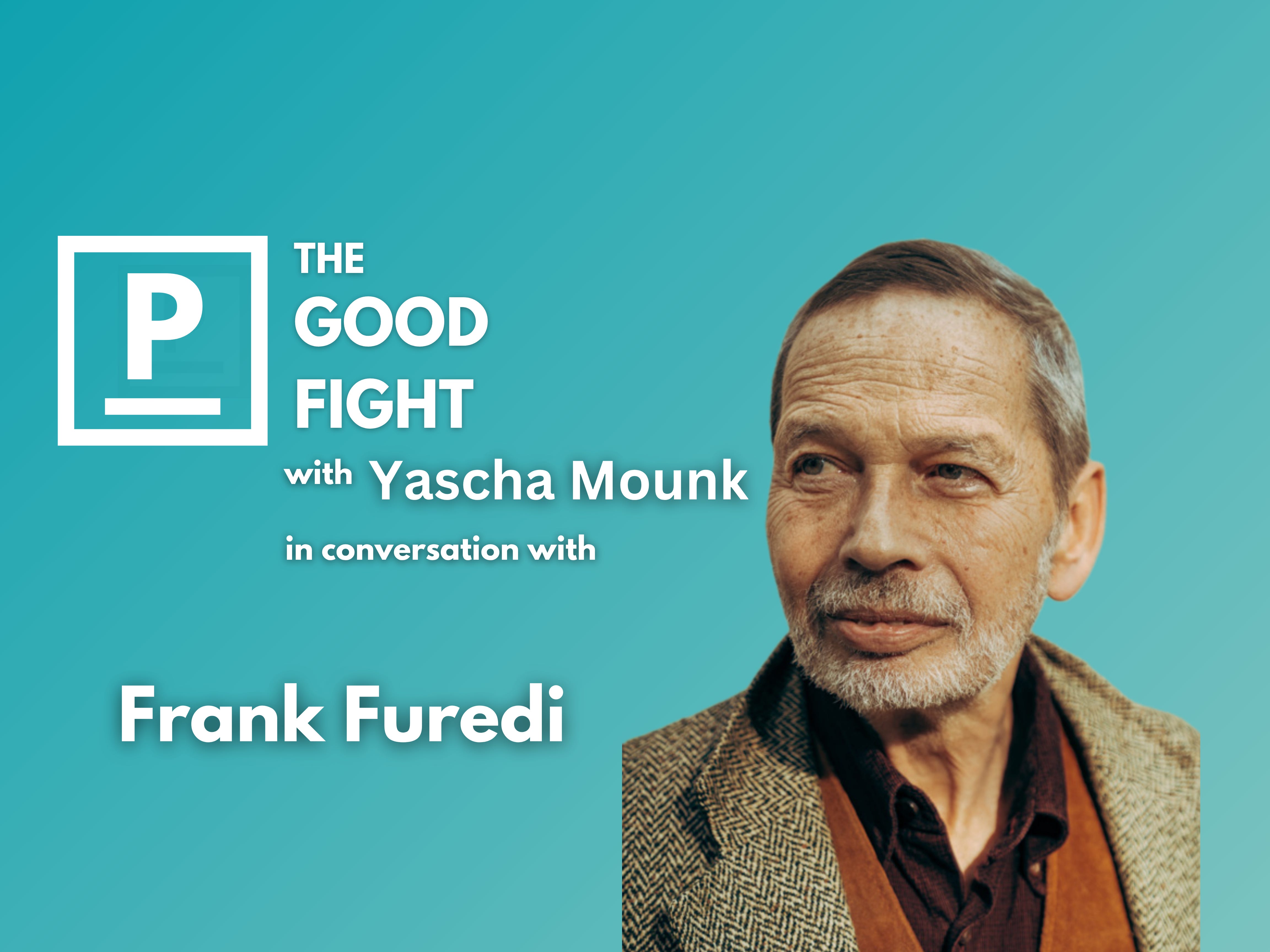
Frank Furedi, author and social commentator, is Emeritus Professor of Sociology at the University of Kent. His latest book is In Defense of Populism.
In this week’s conversation, Yascha Mounk and Frank Furedi discuss whether populism is a legitimate force or a threat to democracy, the impact of political polarization on mainstream parties’ claim to represent ordinary citizens—and to what extent Viktor Orbán undermined democracy in Hungary.
This transcript has been condensed and lightly edited for clarity.
Yascha Mounk: We probably have different views about populism, but I think it is important for some people to make a real, systematic defense of it. I have had many people on this podcast who worry very much about populism, so I am looking forward to hearing from somebody who thinks it can be a salutary movement in different ways. Perhaps before we get to what you think is salutary about populism, a prior question: Why do you think populism is needed in this political moment?
Frank Furedi: We are living at a moment when there seems to be a very selective approach toward both democracy and freedom. A lot of people seem to think that if a vote goes against them, then somehow that is the flaw of democracy. Majoritarian democracy in particular is seen as some kind of evil. I had this experience in Amsterdam, where I had a debate at the Balie, a liberal debating forum. It is a very nice venue in the middle of Amsterdam. The issue at stake was democracy and populism, and this was before I wrote the book. I was arguing for the importance of democracy. I said that it is a foundational value, and that it is not something we can selectively adopt or reject.
Then this guy put up his hand and said, Professor Furedi, are you saying that democracy is good in and of itself, and you would even respect democracy if it went against your views? I said, yeah. I would rather lose an election democratically than win an election undemocratically. For me, democracy was non-negotiable. When I said that, there was a pause in the audience, and a lot of people shook their heads. I realized that what I had said was controversial, which I did not think it was. So I went away and started thinking about why an educated audience had this very conditional approach toward the exercise of democracy. Then I went to bookshops and noticed that all these books were being published warning about the dangers of democracy.
Mounk: I agree with you that there is a willingness to deprioritize democracy when you disagree with what the majority of your fellow citizens think. I have made this point repeatedly: obviously, it is part of democracy that you sometimes think the majority of your fellow citizens are wrong. It would be very strange and schizophrenic to always have to agree with your compatriots whenever they come to a different view from you. But if you think that a majority of the people, persistently and over a long period, is systematically wrong about the most important things, that a majority is willing at the drop of a hat to be sexist and racist and retrograde about everything, it starts to undermine your commitment to democracy. Why agree to be ruled by a majority if you think that a majority will, in many or perhaps most situations, be on the side of evil things?
I do think there is this tension that you are talking about, and it is something I worry about. Tell me a little more about why you think that is such a central feature of our political situation today, and how it requires us to embrace a very different mode of politics.
Furedi: There are several reasons, but probably the most important one, which has emerged in the last twenty years, is the growing trend toward political polarization, where people only talk to people like themselves. Instead of regarding people on the other side as fellow citizens, or maybe as political opponents, they regard them as enemies. When you have this polarized environment, you almost end up with a sense of fantasy about your opponents. This is very much the case with populism, which is regarded as really fascist adjacent, just a prelude to people putting on their brown shirts and a horrible threat to society. That then becomes a legitimation for your hatred toward democratic decision making.
I think the most interesting example here is radical environmentalists, who argue that we have not got time to convince people, that we have not got time to demonstrate that we are right. All we need is about ten percent of society to agree with us, and that is enough. You do not care about what the majority thinks. When you think like that, it becomes the prelude to something more dangerous, where you see people in a way that does not correspond to reality.
I am Hungarian. One of the things I always found very interesting was that the Hungarian government of Orbán was always seen as anti-democratic, quasi-fascist, far right, and everything else. Time and time again, if you lived in Europe, he was represented as a big threat to democracy. This forgets the fact that in the last four years, for example, the opposition won elections in Budapest. The mayor of Budapest became his opponent. When Orbán lost the election, he announced his defeat within an hour and graciously handed over power to his political opponents. This is a guy who for the previous fifteen years was portrayed as a democratic backslider, somebody where democracy did not really prevail.
Anybody who knew what was happening at close quarters could argue that maybe there is corruption in Hungary, and there are a variety of different problems in Hungary, but they were not qualitatively different from what exists in many, many parts of Europe. When you have this polarized environment, it gives you the authority, the permission, to regard democracy as dispensable.
Mounk: I want to make sure that I give you the floor to build and defend your position. There are important elements on which we agree, but also some important elements on which we will disagree, including the nature of Viktor Orbán’s government in Hungary. I will come back to that.
On the side of what we agree on, I wrote a whole essay on my Substack about Karl Popper’s paradox of tolerance, which has become a weird meme. There is a comic version of it on one page that used to go around a lot on social media. My students often cite it. I think it often gives people lazy permission to say, we cannot be tolerant toward the intolerant. Karl Popper told us so. So let us censor anybody we dislike. Let us protest against any speaker at our university campus we do not like. Let us ban political parties that we find to be dangerous. There is a real chance that Germany is going to move toward trying to ban the AfD, even though the AfD is now the leading party in the country in the polls, which I think is a very, very bad idea. That is based not just on a normative mistake but also on a real misreading of Karl Popper. Popper in general was a huge defender of an open society. He was precisely worried about people who thought that they knew what political truth and political virtue were and could impose them on society.
We hope you’re enjoying the podcast! If you’re a paying subscriber, you can set up the premium feed on your favorite podcast app at writing.yaschamounk.com/listen. This will give you ad-free access to the full conversation, plus all full episodes and bonus episodes we have in the works! If you aren’t, you can set up the free, limited version of the feed—or, better still, support the podcast by becoming a subscriber today!
If you have any questions or issues setting up the full podcast feed on a third-party app, please email leonora.barclay@persuasion.community
This whole paradox of the intolerant comes from one footnote of his that I think was hastily written and never redrafted. On my interpretation of that footnote, though it is a little hard to know how to interpret it, what he was saying is that we cannot let violence hide behind tolerance. That is a perfectly sensible point, which I am sure you agree with and everybody should agree with. Obviously, in a democracy you have to defend the rules of democracy. If some people use baseball bats or guns to make it impossible for political opponents to hold meetings, then you obviously cannot tolerate that. It does not mean that at the drop of a hat you can censor anybody you disagree with, because that is what it takes to solve the paradox of the intolerant.
Perhaps it is worth talking for a moment about what you mean by populism. I will set out what I mean by the word a little later in the conversation. When you defend populism, what definition do you have in mind? And what definition do you think the people who worry about populism have in mind?
Furedi: People who worry about populism tend to worry about it externally.
Mounk: I believe you cite me as a prime example of the ills of that academic literature in your book, which is perfectly fine.
Furedi: Yeah, why not? It is a free country. The point I am really making is that almost everything written about populism is written by its opponents. There are some exceptions, but almost every monograph, and every book I have come across, is written by people who a priori regard populism as the enemy. What is interesting is that when you talk to people who are called populists, none of them describe themselves as populist. When I talk to someone like Orbán, or to somebody in Meloni’s party or elsewhere, they talk about themselves as conservative. Orbán calls himself a bourgeois conservative, and his big heroes are Adenauer and de Gaulle. That is the kind of people he looks up to. But in other people’s eyes, he is a prime example of populism.
I became interested in the very fact that we have this perverse situation where the term populism has been hijacked almost entirely by its opponents. They dominate the narrative, they dominate the cultural script that prevails. So I started looking at it, and I came to the conclusion that although there are different varieties of populism historically, because historically populism was much more linked to the left than to the right, when you go back to the American example in particular, but also elsewhere, you find that today the main manifestation of populism tends to be one concerned with defending culture, whereas left-wing populism was much more concerned with defending the economic status of people, their living standards.
In my eyes, what is interesting about populism today, and this is a historically specific understanding, is that populism today is principally involved in the business of cultural rescue. They are trying to maintain and hold on to certain traditions, certain values, a way of life that they think has escaped and no longer exists. What is interesting for me is that there is a fundamental distinction between the parties that are called populist and what I call, in my book, the spirit of populism. The two are not the same. What I argue is that the spirit of populism has emerged and become so powerful not because the populist parties are so charismatic or have such a great political program, but because a vacuum has been created by the delegitimation of the legacy parties. In that moment, when people feel that these old parties no longer represent them, it is the spirit of populism, this quest for solidarity, this quest for a homeland, for being part of something, for being rooted in some kind of place. It is that sensibility and the aspiration for a voice. I think that is the most important thing. People want to be part of the conversation, and that to me is the most democratic dimension of the popular spirit.
Mounk: I have lots of questions about this, but let me focus on one quite narrow question for now, just so that I am sure I understand your position. When you are talking about that cultural defense or cultural renewal, that feels distinctive of right-wing populist movements. It might describe, if you are being generous, Marine Le Pen, or it might describe Giorgia Meloni. It surely does not describe Jean-Luc Mélenchon or Zack Polanski. Do you think that applying the label of populist to somebody like Mélenchon or Polanski, or for that matter somebody like Hugo Chávez, is a category mistake? Are those just totally different movements? Or would you recognize that they share some set of features that makes it worth calling them populists as well? Surely they are not engaged in a project of cultural defense in quite that way.
Furedi: Well, that is the point I was trying to make. There is a difference between the left and right versions of populism, and it principally depends upon culture. But there are left-wing populists that I would see as genuine populists. Podemos in Spain is a very good example, or Syriza in Greece. You mentioned Chávez. These are people who I think had a very clear populist leaning and sought to give representation to a voice. I think Polanski is not a populist. He is much closer to the establishment way of thinking. If you look at his main source of support, other than the Islamist support, it tends to come from the layer of society that is high middle class professionals.
Mélenchon is again interesting, because he began as more of a proper populist in his early career. But the more he adopted identity politics, and the more his politics began to converge with Islamism, the more he became a French representative of the kind of identity politics we have seen in the United States. We can have a discussion and debate as to what extent the politicization of identity is another form of populism. But my argument is that these movements will not have the capacity to sustain themselves, because the only way populism can survive in the short and medium term is if it responds to people’s yearning for cultural security.
Mounk: I am a little bit confused, because perhaps we need to go more into what cultural security means to you. I have trouble seeing Hugo Chávez, and even more strongly Podemos or Syriza, as movements that are trying to defend cultural security in that way, at least on many cultural dimensions. I think we would agree that culture is in many ways at the heart of our contemporary politics now. You are quite skeptical, I believe, of principally economic explanations for the rise of populism, and by and large I agree with you on that, though it may be a little different for left-wing populist movements. But when it comes to a lot of these cultural questions, a party like Podemos was very much on the side of the cosmopolitans and the knowers and so on that you decry in your book. I find it hard to see how, in your definition of populism, you can count those movements as populist. I think I have a definition of populism where I can connect those two, and we will come to that.
Furedi: Well, I was not very clear. I was just trying to explain that there are different forms of populism. My argument is that the reason Podemos, for example, failed to gain momentum and became gradually marginalized is that it did not attend to the cultural needs of Spanish society, of working people’s desire for a homeland, for meaning. One of the reasons a lot of so-called left-wing populist movements have become marginalized over the last ten years is that they no longer have that same capacity, because they self-consciously avoid trying to connect with that desire for cultural defense. That is why I argue that the future in the medium term of populism, certainly in Europe, is the national populist variety.
Now, you raise an important question about the terms you use. I actually think that cultural conservatism can be complementary to different political standpoints. You could be a liberal and still be culturally conservative. You could be a socialist, even a communist, and be culturally conservative. At the moment, those movements have become entirely detached from any kind of culturally conservative sensibility, and I think that is one of the big problems we face.
One of my worries about populist movements, not the people who vote for them, because I actually think the people who vote for them are right, but the people who represent them, is that they have essentially anti-Enlightenment sensibilities. For them, “liberal” is a dirty word. I often have arguments about that, because liberalism should not be blamed for the ills of the world. What we now have is a situation where genuine liberalism and genuine Enlightenment thinking is attacked by people like Mélenchon no less than by people in the MAGA movement, if you see what I mean. I think the reason for that goes back to this decoupling of public life and the polarization process. That is one of my worries about populism: some of the representatives have become the mirror image of the identity politics opponents that they have.
Mounk: That is an interesting point, and on that we very strongly agree. To stick with establishing our understanding of what it is you are defending, your book is called In Defense of Populism. Why not call it In Defense of Right-Wing Populism? Or, more specifically, why not call it In Defense of Cultural Security, or Cultural Renewal, In Defense of Belonging, In Defense of a Nation? It seems to me that the way political scientists have historically defined populism has not been in accordance with one specific ideological tradition, and that is for very good reason. When you look at the origins of the term in the United States, it is the Populist Party of the late nineteenth and early twentieth century, which was mostly about taking on the robber barons. In the context of Latin America, it has all kinds of different incarnations, but many of those are again on the political left.
To take the term populism and then defend it on the grounds that what you really think we need at the moment is a defense of the nation-state and its customs and its certainties, a return to firm borders, a return to a pluralistic society but one that does not systematically go against the cultural preferences of a majority, is a much more specific ideological project. We can debate the merits of that as a political project, but it would be better described as a form of defense of common-sense conservatism, if you want to call it that, or national conservatism. Choose your term. The word populist is both overly inclusive and underinclusive of what you are describing. There are going to be many people you might even call populist, like Podemos, and certainly most people who use the term populism, who do not want to do that at all, who are not interested in the project you are defending. And there are many people who fall under that umbrella who are not populists on anybody’s approach.
To give a couple of examples, the influential Bavarian Prime Minister Franz Josef Strauss, whose name Munich’s airport still bears, was not a populist. He was very much an establishment figure, but he was certainly minded to defend a lot of the values you are talking about. Or, even more recently, perhaps something like Wolfgang Schäuble, the late German finance minister, who was a pretty full-throated conservative in many ways and represented the more traditional conservative electorate of the Christian Democratic Union, but who certainly was not a populist. It seems to me that a lot of your book is arguing for, perhaps you would call it, a liberal conservatism that is willing to defend borders and the nation. That just seems to me a different entity from populism, because there are going to be some populists who are not interested in that project at all, and many politicians who identify with that project who would not call themselves populists and whom nobody would call populists.
Furedi: The reason I wrote the book and kept that title is that, as I argue in the book, the defining distinction in public life in the West is no longer between left and right but between populist and anti-populist. I was aware that there is literally no intellectual defense of populism. The last time I saw anybody really systematically defend populism was Christopher Lasch, which was a while back. For me, it was quite important to establish that. In the book itself, I make the point very clearly that what I am defending are not populist parties in the way they are generally seen or framed. What I am defending is what I call the spirit of populism, which is almost like a zeitgeist that has captured the imagination of millions of people throughout the West.
I make the point that what I am writing about is a historically specific phenomenon. I am not talking about the populists in Latin America in the interwar period or in other situations. I am not talking about the Narodniks or the American Populist Party. I am talking about this particular phenomenon, which is a spirit that attempts to provide people who feel unrepresented, and that is a really key thing, who have not got a voice, who feel that they are not part of the conversation, with a certain degree of support. I find that one of the healthiest developments since the Cold War. It is a very specific problem that I am looking at. If I had been around fifty or sixty years ago, I would not have written a book in defense of populism. Certainly that would not have been the title, because the problems that were posed were very different.
I am responding to a set of problems whereby ideals that were once seen as mainstream in communities, things like patriotism, which has a very honorable historical legacy, are now regarded as somehow associated with far-right flag-waving individuals. There are issues that concern people, like what is a man and what is a woman, which for thousands of years was not controversial. Suddenly people are not able to say what they really think, because it is seen as transphobic. I could give you a long list of things that were, to use your term, common sense for a very long time, part of people’s taken-for-granted values, which somehow have been stripped away and left people without any kind of moorings or roots.
The fact that people now feel confident to challenge that, and not only feel confident, but year by year their voices are getting stronger and stronger. When I read Politico or whatever, they all have these articles: When is the populist wave going to stop? Is it not really good that the Swedish Democrats did not manage to win in Sweden in the recent elections? That basically gives us the formula for defeating populism. All of these continually misread the fact that there is a spirit abroad which is at the moment unrestrained and uncontained, because it is a spirit that captures the imagination of a lot of people. The book tries to provide an intellectual defense of that and an explanation of that, so that people can understand what is so influential and important in the moment we are going through.
Mounk: I am sympathetic to some of the points you are making. I have been asked the question, as I recently wrote, whether the populist wave has crested, more than any other question by journalists over the last ten years. From the beginning, I thought that was not going to be the case. I think it is quite clearly true now that, in your words, the populist spirit is continuing to rise and expand. If you want to understand our situation today, you have to reckon with that moment. I also have real concerns about some of the ways in which we have given up on values that I think are important, one of which is the defense of control over your national territory, part of which is being able to control your border. I think immigration has many good things in the right ways and in the right context. We are both immigrants in different ways in different countries. But there is nothing bad or strange about ordinary people saying, we want to make sure that we know who is coming into the country, and that we have some influence over who comes into our country.
I have also written a book, as you know, criticizing a new kind of political ideology on the left, which I think is an illiberal form of identity politics, and which I think is very damaging. The reason I nevertheless would not call myself a populist, and worry about embracing populism, is perhaps that I have a different view of what I mean by that. I agree with you that many people make the mistake that when they do not like a particular policy or view from some politician, they reach for the term populism to say that person is popular, so they are evil. I think that is bad. I do not think that populism is about an ideology. I think what you are defending is a set of ideological presuppositions, some of which I agree with and some of which I disagree with, but which is a perfectly legitimate set of political points of view in a democratic society.
For me, the definition of populism is not rooted in one such ideological tradition. It is a mode of doing politics, which I would argue is characterized by two features. The first is anti-elitism. It is the claim that the core source of our troubles is the elite, particularly the political elite, and the way in which it is mismanaging things, getting things wrong, and being self-serving, and cares more about various outsiders than about people like you and me. I would make two points. First, that is right in some places and less right in other places. Some political elites are relatively better, and some are relatively worse. Certainly, on the whole, you cannot say that political elites have been doing well. There is a nice German phrase, sich mit Ruhm bekleckern: they have not exactly been spilling honor and achievement all over themselves over the last decades. They have done quite poorly in all kinds of ways. So some form of anti-elitism may be perfectly right and appropriate. It is also a natural part of politics. I think that Obama’s 2008 presidential campaign was in important ways anti-elitist. I have only just come to Washington. I am not a career politician. These people do not understand what is really important. I am on the side of Main Street rather than Wall Street. Those were all anti-elitist sentiments that were part and parcel of his 2008 campaign.
I would also argue that another part of the definition of populism is anti-pluralism. Anti-elitism is not enough. You need to have both anti-elitism and anti-pluralism for somebody to be counted as a populist. Part of anti-pluralism is a tendency to say, I alone truly represent the people. Only my movement truly speaks for what people want. By virtue of that fact, if you disagree with me, you do not just have a wrong view about something. You are not just blind to certain problems we have. You are actually a traitor to the nation. You are an enemy. You are somebody who is illegitimate. You are somebody who is dangerous.
In my reading, what Hugo Chávez, parts of the Podemos movement, Jean-Luc Mélenchon, and Zack Polanski, as well as Viktor Orbán, Donald Trump, Narendra Modi, and Recep Tayyip Erdoğan, have in common is that anti-pluralism, that unwillingness to treat their political opponents as legitimate. I would argue that it is that element of their politics that I find to be potentially dangerous to our democratic institutions. They might have certain policy preferences I disagree with. That is fine. That is within the realm of legitimate democratic politics. That is not a reason to brand them a danger to democracy, even if it is things I really care about, even if it is things where we have deep disagreements. That is a normal part of democracy. But when they say, I alone truly represent the people, I worry that that is precisely what leads them to start undermining free speech, the independence of institutions, and the role of other institutions within the state.
I have more things to say about this, but do you find that to be a helpful definition of populism? And insofar as it is, do you share my worries about its anti-pluralist nature?
Furedi: If you could just concentrate on the pluralism side of it. In the book, I explain that that is one of the accusations laid at populists: that they are meant to be saying, we are the only people who can represent the nation. Everybody else is against our people. There is a kind of purity element attached to that. To be honest, although there might be a strand in that direction, when you actually look at what populists have said and written about, and what the political activists have said, I think it is much more nuanced. The idea that they have this very powerful anti-democratic, anti-pluralist impulse in them is something that is really exaggerated, which does not mean to say that it is not a danger.
If you are worried about hostility to pluralism, then in the twenty-first century, certainly in the last twenty years, you have to worry about the anti-pluralist opponents of populism. They have basically decided that somebody can win almost fifty percent of the vote in a part of Eastern Germany, but because you do not like them, that electoral performance can be discounted altogether, because they are the enemy. The kind of language that you think populists are rehearsing and using, that we alone know what is true, we alone represent the people, actually characterizes the opponents of populism much more than the populists.
I know this from personal experience, because I was running a think tank, which I have just stopped doing, in Brussels. We would have meetings. For example, we had a meeting on what it means to be a conservative woman: the relationship between conservatism and feminism. It was an ordinary academic discussion involving four women. The local Antifa decided that this was an outrage and something had to be done. After they tried to break into the meeting, the police had to come out with water cannons to allow us to have it. At least we had the meeting then, but Antifa managed to close down something like six or seven of the venues where we organized debates. If you look on the Antifa website in Brussels, it says Frank Furedi, public enemy number one. So you have this ironic situation where the anti-populist Antifa behaves as fascists used to behave.
As a genuine pluralist, as somebody who is committed to debate and discussion, I find that that is a characteristic much more of the opponents of populism than of populism itself. We have to be even-handed. In some situations there are populist individuals, leaders, who veer in that direction. I know, for example, that there are some members of the AfD in Germany whom I would not trust with democracy. I think you have to be open and criticize them and challenge them. But I do think there is a double standard the anti-populist literature has adopted, which is the reason I wrote the book.
I think populism has always aspired toward bringing people together, but that aspiration to create common ground did not necessarily lead to a hostile orientation toward others. You have to remember that it was the American populist movement that first joined hand in hand with Black activists in the early part of the twentieth century and tried to overcome some of the racial divide that occurred. It was not the Republican Party, and it was not the Democratic Party, the mainstream parties, but the populists. I have confidence that that potential can still be recreated if the circumstances changed and we managed to depoliticize so many of the cultural issues that have unfortunately been rendered into political issues.
Yascha Mounk: I agree with you that there are illiberal forces on the left and the right today. I agree that the attempts to close down political speech are absolutely unacceptable. I agree that on college campuses in the United States, or sometimes in Brussels, there are attempts to make political speech impossible because its content displeases certain groups. All of that is deeply concerning. I would not, however, take so lightly the way elected political leaders, heads of government and heads of state, have been using very clearly anti-pluralist language in a consistent way. Let me quote a few examples I have in front of me.
Donald Trump, in the run-up to the 2024 election at a Fox News town hall in October 2024: “We have an enemy from within. We have a lot of bad people. But when you look at Shifty Schiff and some of the others, yeah, they are to me an enemy from within.” He said, “I think Nancy Pelosi is an enemy from within.” That is not just calling political opponents bad or wrongheaded, but evil, repeatedly. He originally entered politics by claiming that Barack Obama is not a legitimate president, that he is not a natural-born citizen, and so on.
Viktor Orbán, whom you cited earlier and to whom I want to return in other ways as well: “After today’s festival gathering comes the Easter cleanup. The Bucks have made it through winter. We are going to dismantle the financial machine that has been using corrupt dollars to buy politicians, judges, journalists, bogus NGOs, and political activists.” In March 2025, he spoke of wanting to rid Hungary of vermin in reference to similar groups.
Narendra Modi, in India, has repeatedly claimed that the opposition Congress party is against India, against the nation: “The spirit of patriotism has died in today’s Congress. The ghost of hatred has entered today’s Congress. Congress stands with anti-national forces,” and so on. Hugo Chávez repeatedly called the opposition escuálidos, “squalid ones,” and said that the opposition were coup plotters and enemies of the homeland.
This stands in marked contrast to the famous instance in the 2008 campaign, in which John McCain, at a town hall in the run-up to the election, had people in the audience saying that Obama is a dangerous man and that they were afraid for their country if he won. McCain said, “I have some fundamental differences with Mr. Obama. You should vote for me rather than for him. But he is a decent man. If he wins, you do not have to be afraid for your country.” The contrast between those forms of political engagement is quite clear to me. It is a significant factor that helps to explain why we refer to these different movements by the same label. What do you think?
Furedi : Well, aside from the small matter that I do not think Trump is a populist, I think he is the very opposite of a populist in everything that he does. If I take the other examples, they are a testimony to the disturbing decline in political speech that has occurred everywhere. I respect your sensitivity to some of these statements that have been made and should not have been made, as long as you have the same degree of sensitivity to the fact that you arrive as an MEP in Brussels and within a day you are called far-right and fascist, which serves as a prelude to suggesting that you are not worthy of being taken seriously, not worthy of being a parliamentarian.
The way I look at it, if you take a step back and look at the political rhetoric being used, it is very rare to find what I call tolerant behavior. Tolerant behavior does not mean you agree with somebody. Even if you hate somebody’s views, you still tolerate their right to say them, and you understand that it is important for public life that tolerance kicks in. One of the reasons I wrote this book is the kind of distortions people make about populism and the way it operates, which means people do not see what is really positive about it. That is why I talk about the spirit of populism and the views that people have. When you ask people why they vote the way they do, they do not say, the reason I voted for a particular politician is that the other side are vermin. They do not say, I voted for these people because I want to get rid of all those people on the other side. There is another reason why they are doing it.
At the moment, the hegemonic discourse in our society, by which I mean Western society, is to assume that there is a pathology on one side and virtues on the other. It does not realize that in many respects the pathological way of behaving in public life characterizes people who are anti-populist. I go to Germany now and again, and I was there recently. I have a lot of friends, particularly in Hessen and in Frankfurt, who are former leftists, in the Green Party, in Die Linke, in the SPD, who, like me, have decided that they have more in common with the so-called populists in Germany than with the old mainstream parties. When I talk to them, it becomes very clear that what they are really expressing is a fear that public life is being closed down on the ground that there is a threat coming from the AfD. Academics and intellectuals are simply desensitized to that. It is not that they are being dishonest. They are so wrapped up in this anti-populist discourse that they cannot see how they themselves have become implicated in something that is at the moment even worse than what they are complaining about.
Mounk: I agree with you that I am very concerned about the overly easy invocation of the paradox of tolerance. It is very easy to say, these people are intolerant, so we can shut them down whatever way we want. Even though it might superficially look similar to what we worry about them doing, that is fine, because we are the good ones and they are the evil ones. I do not think that works substantively, and I do not think it works as a political argument. I think there is a kind of paradox of populism, and I am going to try to make your point for you. Suppose you have a political situation in which both sides engage in some genuine form of mutual toleration, in some genuine form of what McCain, to his honor, practiced in that moment at that town hall. He said, “This is my political opponent. We are in the midst of a heated campaign. I really want to win, but I am going to stop short of saying this is the enemy within, this is vermin, this person is illegitimate. In fact, I am going to go against my own crowd at this town hall to emphasize that this is a legitimate opponent. If they win, that is part of the democratic process.”
Part of the problem is that when that norm breaks down, the parties that initially continue to operate with that understanding of mutual toleration have to make a choice. The easy thing is to say, we are worried about them. They are going to destroy democracy, so we mustn’t tolerate them. They are the enemy from within. They are vermin. You can very quickly get to a situation where each side echoes the other. The really striking thing to me was that in the American presidential election in November 2024, there was a poll in Pennsylvania, an exit poll, I believe, asking whether voters believed American democracy to be in danger. There were two interesting findings. The first is that in a deeply divided country where a lot of issues are 50-50, this was something like a 70-30 issue. A clear majority of Americans said yes, democracy is in danger. The second is that, among the people who believed democracy to be in danger, more had voted for Donald Trump than for Kamala Harris.
You can get into this weird situation where each side echoes the other and both sides become anti-pluralist. I think that is a genuine dilemma. How do you deal with political parties that are illiberal in various ways, that are anti-pluralist in various ways, without yourself becoming anti-pluralist? What I do not think it is, is a defense of being anti-pluralist. Let me put it this way: I take it we agree on the importance of avoiding anti-pluralism. Or do you think there is a justification for this form of anti-pluralism? When you hear the phrases I just quoted from Trump and Orbán and others, do you think those are bad things for them to say? You might like other things about them. I do not think you like Trump very much, but you are somewhat defensive of Orbán. Do you think that saying those things was worrying, or are you not concerned about heads of government and heads of state engaging in that kind of political speech?
Furedi: Obviously, any manifestation that is anti-pluralist, and by definition anti-pluralism also means anti-democratic, is not something I can ever support. I would make one point: you have to look at the record of people like Orbán. In sixteen years, how many demonstrations did he ban? Zero. Compare that to the number of demonstrations banned in many other places. How many political parties or individuals did he ban? Zero. There is a difference between rhetoric and what they have actually done. Nevertheless, anti-pluralist rhetoric from any quarter is quite important.
I agree with you about each side mirroring the other, with one qualification. The question we have to ask is when the mirror imaging began. What was the chronologically prior experience that led the other side to begin to mirror? The way I see it, the most powerful anti-pluralist impulse is something that became legitimated some time ago, particularly among the intellectual class. I am sure you have worked in and spoken at Western universities, and you will know that they do not have a pluralistic orientation toward political views. They have become extremely one-sided over the last thirty, thirty-five years. That is not a problem for the universities only. It is a problem because it communicates the idea that we do not have to speak to people, we do not have to argue with those people. Indeed, in America they have expressions like, go educate yourself, meaning I am not going to try to convince you, because there is no point debating people like you. That kind of political culture has become very strong and has enveloped the public life of politicians.
When I look around and ask who is behaving in the most anti-pluralist way, it is, in Germany, for example, the German government, which has raised the possibility of banning this and banning that. In Britain now we are having similar discussions about how to deal with Reform in a way that isolates and undermines them. There is a prior hostility toward the emergence of new political forces by the mainstream establishment, which has created that anti-pluralist political culture, to which some of the populist political leaders have then responded in kind. I do not see an equivalence there, but I do see a mirroring element going on.
What I really worry about at the moment, and I go back to tolerance all the time because I think tolerance is the key issue of our time, is that people in government have invented expressions that are fundamentally hostile to the ideal of tolerance. Take, for example, the expression that people in the British government use: “zero tolerance.” They think the idea of zero tolerance is a really positive goal to achieve. They do not realize that if you get rid of tolerance, because that is what they are really getting at, even though they have a more interesting way of expressing it, you give tolerance itself a negative connotation. So many people I talk to, instead of upholding Pierre Bayle’s and John Locke’s liberal ideas of tolerance as a wonderful achievement in a world where people used to kill each other if they had different views, regard it as something that can be swept aside by the people who are meant to be liberal.
In the rest of this conversation, Yascha and Frank discuss to what extent Orbán undermined democracy in Hungary and whether in future we will become even more polarized. This part of the conversation is reserved for paying subscribers…
Listen to this episode with a 7-day free trial
Subscribe to Yascha Mounk to listen to this post and get 7 days of free access to the full post archives.


